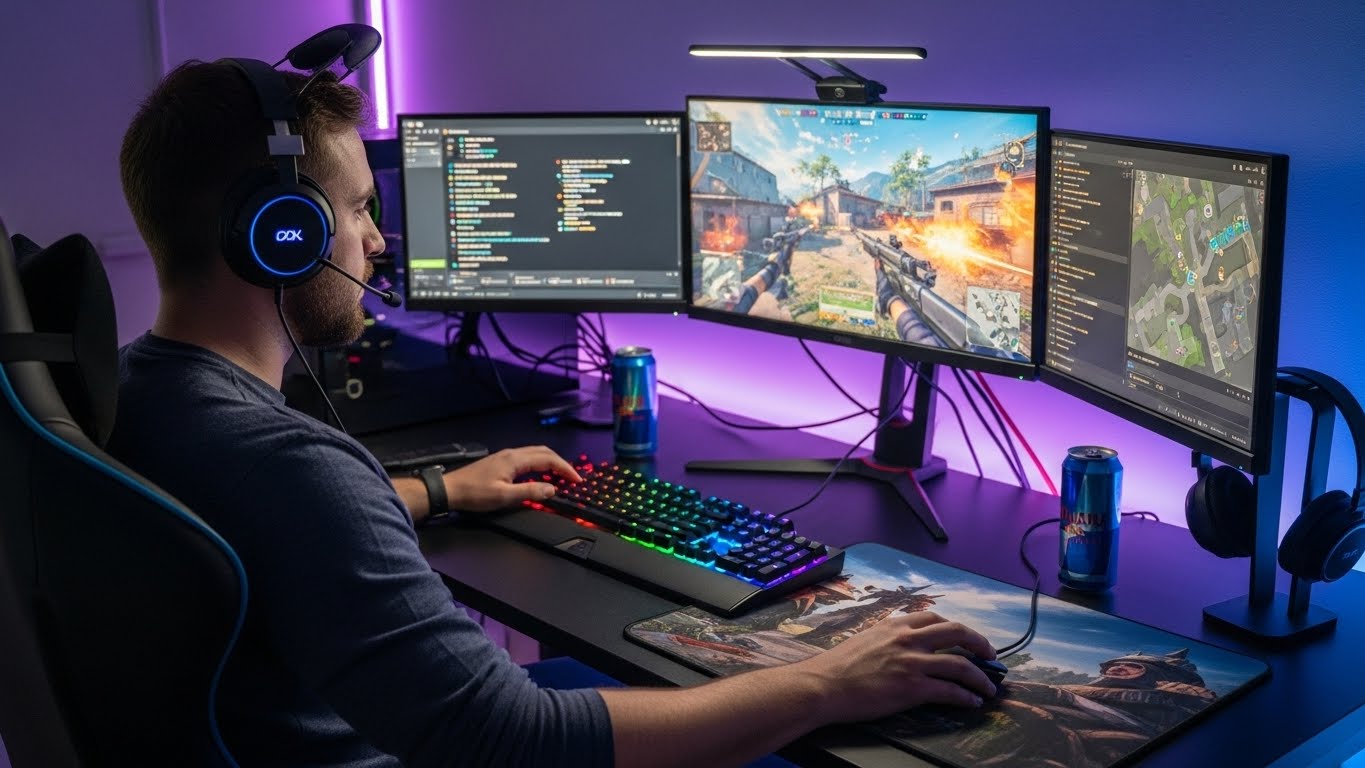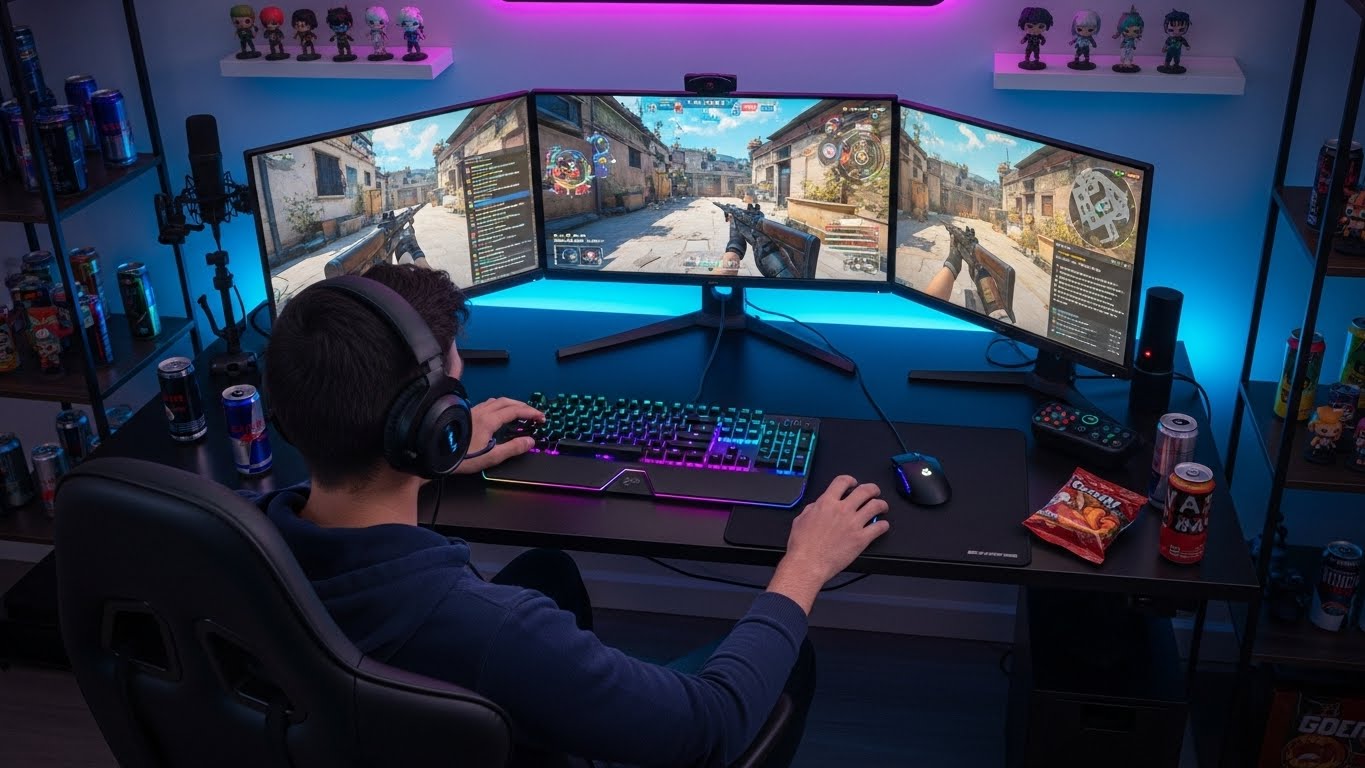

Gaming has evolved dramatically over the past few decades, becoming a global cultural force that goes beyond simple entertainment. What was once considered a niche hobby has blossomed into an industry worth billions, with a diverse fanbase spanning across ages, cultures, and backgrounds. From the early days of arcade games to the immersive virtual realities of today, gaming has transcended its role as a pastime to become a powerful medium that shapes entertainment, culture, and technology. This blog explores the transformative journey of gaming, its impact on society, and how it continues to push boundaries in the modern world.
The Birth of Gaming: Humble Beginnings in Arcades and Home Consoles
The history of video games began in the early 1970s with simple, arcade-based games. Pong, released by Atari in 1972, marked one of the first commercially successful video games, introducing players to the world of interactive entertainment. While primitive by today’s standards, Pong was revolutionary at the time and laid the groundwork for what would become an expansive industry.
In the following years, the growth of arcade games—Space Invaders, Pac-Man, Asteroids, and others—helped cement gaming as a popular activity in arcades, malls, and entertainment centers. These games were designed for quick play, offering a combination of skill and competition that attracted players from all walks of life. People would flock to arcades to compete for high scores, making these places community hubs for a new kind of social interaction.
Simultaneously, the idea of bringing gaming into the home began to take shape. The Atari 2600, launched in 1977, marked one of the first widely successful home consoles. It gave people the ability to play games at home rather than having to visit an arcade. By the early 1980s, the home console industry was in full swing, and games like Space Invaders and Pac-Man were ported to home systems, making gaming accessible to a much wider audience.
The Golden Age of Gaming: 1980s and 1990s
The 1980s and 1990s are often considered the golden age of gaming, as the industry began to mature and technological advancements led to new gaming experiences. It was during this time that many of the iconic franchises that are still beloved today were born.
The 1980s saw the rise of the Nintendo Entertainment System (NES), which helped revitalize the gaming market after the crash of 1983, caused in part by the oversaturation of low-quality games. The NES introduced classic titles like Super Mario Bros., The Legend of Zelda, and Metroid, which not only became massive successes but also established the blueprint for many game genres that we still see today. Nintendo’s success with the NES made it the dominant force in the gaming market and solidified gaming as a cultural mainstay.
Simultaneously, the 1990s ushered in a new era of gaming with the introduction of 3D graphics. Sony’s PlayStation, released in 1994, and Nintendo 64, launched in 1996, both offered advanced 3D processing power that allowed developers to create more complex and immersive gaming worlds. Super Mario 64 became one of the most influential games of its time, showing players the potential of 3D exploration, and Final Fantasy VII took storytelling and cinematic presentation to a whole new level, establishing RPGs as a major genre in gaming.
The 1990s also marked the beginning of online gaming. Multiplayer games like Doom and Warcraft allowed players to connect over local area networks (LANs) and later the internet. This connectivity was revolutionary, offering gamers the opportunity to play with others around the world, a concept that would become central to modern gaming.
The Rise of Online Gaming and Social Interaction: 2000s
The 2000s were a turning point for the gaming industry, with the rise of broadband internet and the proliferation of multiplayer online games. Consoles like the PlayStation 2, Xbox, and GameCube continued to push the boundaries of technology, but it was the introduction of Xbox Live in 2002 and PlayStation Network in 2006 that completely transformed the gaming landscape. These services allowed players to connect online, voice chat, and compete with others worldwide, laying the foundation for the global gaming community that exists today.
One of the most important milestones of this period was the explosive growth of Massively Multiplayer Online Role-Playing Games (MMORPGs). World of Warcraft, released in 2004, became a phenomenon, attracting millions of players who would spend countless hours exploring vast virtual worlds, engaging in quests, and building communities with others. The social aspect of these games, combined with their immersive environments, helped shift gaming from a solitary experience to a deeply social one.
Additionally, the 2000s saw the rise of “casual gaming” with the advent of mobile phones. In 2007, Apple launched the iPhone, and with it, the App Store, which revolutionized the way people played games. Titles like Angry Birds, FarmVille, and Candy Crush Saga quickly became cultural icons, appealing to a wider demographic of players who had never before considered themselves “gamers.” Mobile gaming allowed people to play quick, accessible games anywhere, anytime, making it one of the fastest-growing sectors of the gaming industry.
The Modern Age of Gaming: 2010s and Beyond
The 2010s saw the convergence of several technological advances that would significantly shape the future of gaming. With high-definition graphics, advanced physics engines, and expansive open worlds, gaming entered a new golden age of visual and narrative design.
One of the most notable developments during this period was the explosion of indie games. Thanks to digital distribution platforms like Steam, indie developers could now publish their games directly to a global audience. Games like Minecraft, Undertale, Stardew Valley, and Hollow Knight became massive hits, showing that smaller studios could compete with the big players by focusing on creativity and innovation. Indie games often explored unique gameplay mechanics, storytelling approaches, and art styles, offering a refreshing contrast to the blockbuster franchises that dominated the market.
At the same time, the rise of streaming platforms like Twitch and YouTube allowed gaming to become a form of entertainment in itself. Gamers could watch others play live, learn new strategies, or simply enjoy their favorite streamers’ personalities. Esports also exploded during the 2010s, with competitive gaming becoming a global spectacle. Major tournaments for games like League of Legends, Dota 2, and Fortnite attracted millions of viewers, with professional gamers competing for huge prizes and sponsorships. Esports is now a legitimate career path for many players, and the industry has grown into a multi-billion-dollar enterprise.
The 2010s also saw the rise of virtual reality (VR) and augmented reality (AR), which promised to revolutionize how games were played. The Oculus Rift and PlayStation VR introduced players to fully immersive virtual environments, allowing them to experience games in a completely new way. Although VR is still in its early stages, its potential for creating hyper-realistic and interactive gaming experiences has fueled excitement for the future.
The Future of Gaming: Cloud Gaming, AI, and the Metaverse
Looking ahead, the future of gaming is filled with exciting possibilities, driven by advancements in cloud gaming, artificial intelligence (AI), and the metaverse.
Cloud gaming, through services like Google Stadia, Xbox Cloud Gaming, and NVIDIA GeForce Now, is set to make high-quality gaming accessible to players regardless of the hardware they own. With cloud gaming, players can stream games directly from remote servers, removing the need for powerful consoles or PCs. This technology has the potential to democratize gaming, making it easier for anyone to play the latest titles on devices as simple as smartphones, tablets, or low-end laptops.
AI will also play a crucial role in the evolution of gaming. AI-powered NPCs (non-playable characters) will become increasingly sophisticated, offering more realistic interactions and dynamic responses to player actions. AI could also be used to create procedurally generated worlds that adapt to a player’s decisions, offering a personalized experience each time they play. AI could even help game developers create adaptive storylines that change based on the player’s choices, making every gaming experience unique.
The concept of the metaverse, a shared virtual space where players can interact with one another in real-time, is another exciting development. Companies like Facebook (now Meta) have expressed interest in creating a fully realized metaverse, where virtual gaming worlds, social spaces, and entertainment could coexist. The metaverse has the potential to redefine how people interact in virtual spaces, blending gaming, social media, and even work environments into a singular, immersive experience.
Conclusion: The Enduring Impact of Gaming
Gaming has come a long way from its humble beginnings in arcades and home consoles. Today, it is an integral part of modern entertainment, a cultural touchstone, and a constantly evolving medium that continues to push boundaries. Whether through social multiplayer experiences, cutting-edge technologies like VR and AI, or the rise of the metaverse, gaming is shaping how we interact with the world around us.
As technology continues to advance and the gaming community grows, it is clear that gaming will remain a vital and ever-changing part of our lives. The future of gaming holds endless possibilities, from new forms of interactive storytelling to entirely new ways of connecting with others. The one thing that remains constant is gaming’s power to bring people together, create immersive experiences, and transform the way we experience entertainment.