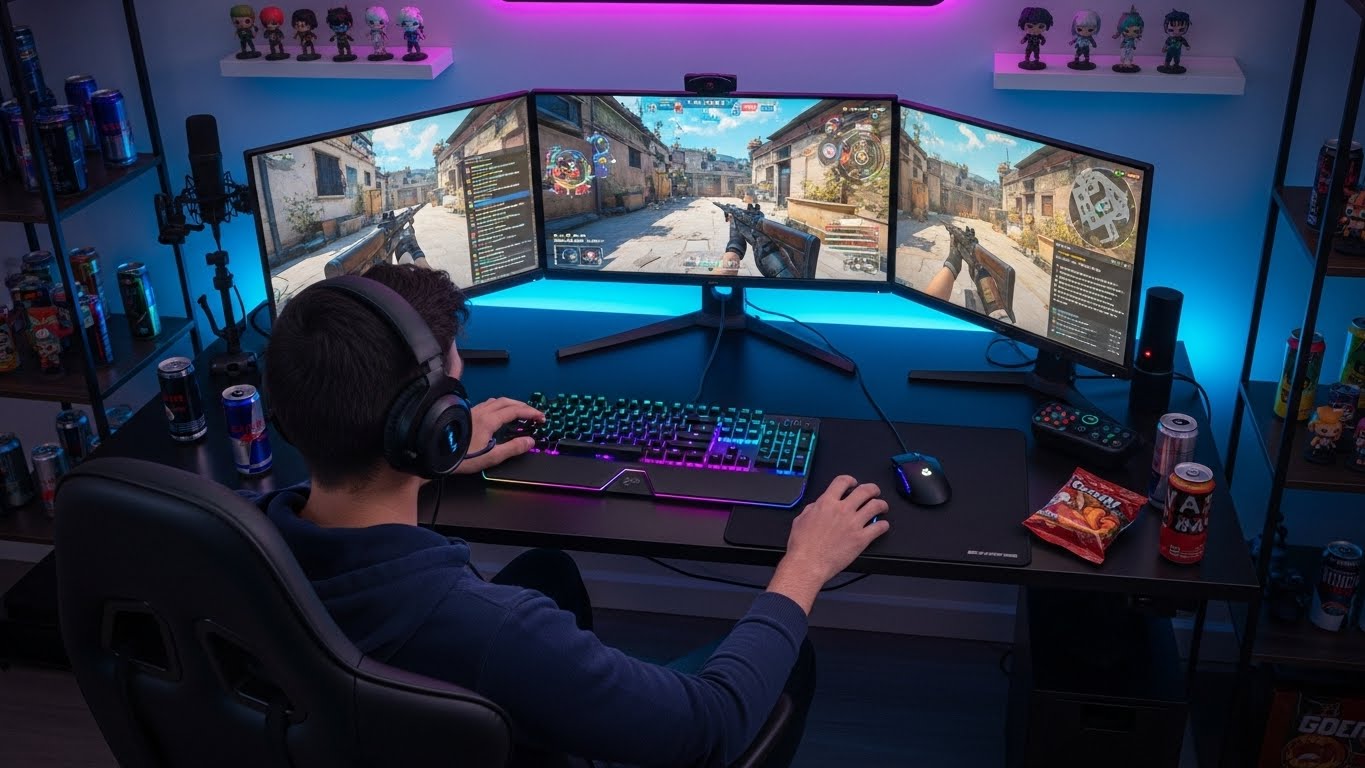

Gaming has come a long way since its humble beginnings in arcades and home consoles. Today, it has become a multi-billion-dollar industry, deeply woven into the fabric of modern culture. Whether you’re a casual player enjoying the occasional mobile game, a competitive eSports athlete, or someone lost in the immersive worlds of VR, gaming offers something for everyone. This blog explores the history, technological advancements, cultural impact, and future of gaming, all while taking a deep dive into what makes the experience so captivating.
A Brief History of Gaming: From Pong to the Present
To understand where gaming is headed, we first need to look at how it all began. The roots of gaming can be traced back to the early 1950s when computer scientists started experimenting with simple games. One of the earliest known video games was Tennis for Two, created in 1958 by physicist William Higinbotham. However, the game that truly kicked off the gaming revolution was Pong, developed by Atari in 1972.
Pong was a basic two-player tennis game, yet it captivated players worldwide with its simplicity and novelty. This marked the beginning of the arcade gaming era, where players would flock to arcades to challenge each other in a variety of games.
In the early 1980s, the home console market began to take shape. The Atari 2600, released in 1977, was one of the first gaming consoles to make it into homes across America. The introduction of the Nintendo Entertainment System (NES) in the mid-1980s revolutionized home gaming, with iconic franchises like Super Mario Bros. and The Legend of Zelda making their debut. These games weren’t just fun; they became cultural touchstones, representing the intersection of technology, entertainment, and art.
The Golden Age of Gaming: 90s to Early 2000s
The 1990s marked the golden age of gaming. With the launch of the Sony PlayStation in 1994, the gaming landscape changed forever. The PlayStation brought 3D graphics into the mainstream, enabling developers to create more complex and visually stunning worlds. This era saw the emergence of highly successful franchises like Final Fantasy, Gran Turismo, and Metal Gear Solid.
Meanwhile, Nintendo and Sega engaged in a fierce rivalry, with the Nintendo 64 and the Sega Dreamcast vying for supremacy in the console market. The 1990s also introduced gamers to the world of online multiplayer gaming. Titles like Quake and StarCraft paved the way for the massively multiplayer online role-playing games (MMORPGs) that would dominate the next decade.
As technology improved, gaming also began to move into the realm of the PC. The PC gaming market boomed in the late 90s, with games like Half-Life, Diablo, and The Sims attracting millions of players. This was also the time when LAN (Local Area Network) parties became popular, where groups of friends would gather to play games like Warcraft and Counter-Strike.
The Rise of Online Gaming and Mobile Revolution
By the early 2000s, gaming was no longer just about single-player experiences. The rise of broadband internet made online multiplayer gaming more accessible than ever before. World of Warcraft became a global phenomenon, with millions of players logging in to explore its vast world of Azeroth. This period marked the rise of eSports, with competitive gaming leagues and tournaments starting to gain real traction.
Mobile gaming also began to rise in prominence during this time. With the advent of smartphones like the iPhone, developers began creating games that could be played on-the-go. Angry Birds, Candy Crush, and Clash of Clans became household names, proving that gaming wasn’t limited to consoles or PCs anymore. Mobile gaming reached a diverse audience, from casual players to hardcore fans, and transformed the way games were designed, emphasizing accessibility and short, addictive play sessions.
The introduction of platforms like Steam, Xbox Live, and PlayStation Network further changed the landscape by allowing players to download games directly to their consoles or PCs, making physical media less essential. The digital distribution of games allowed indie developers to thrive, creating a wealth of unique, creative, and experimental titles that expanded the boundaries of gaming.
The Impact of Gaming on Culture and Society
Gaming is no longer just a form of entertainment; it’s become a cultural phenomenon that influences movies, music, fashion, and even politics. The massive popularity of games has made them an integral part of contemporary culture, with references to games popping up in television shows, movies, and music videos. The Witcher series, originally a game, became a hit Netflix show, while Pokémon remains a global franchise spanning video games, TV shows, movies, and even card games.
Games are also being used as a platform for storytelling, with titles like The Last of Us, Red Dead Redemption, and Bioshock Infinite blurring the lines between gaming and traditional cinema. These games focus heavily on narrative and character development, making players feel as though they are actively participating in the story.
Additionally, gaming has become a means of social connection. Online multiplayer games allow people from all over the world to interact, form communities, and make lifelong friends. Games like Fortnite and Minecraft have built massive, engaged player bases that transcend geographical boundaries. Twitch, YouTube Gaming, and other streaming platforms have also given rise to a new breed of celebrities—streamers and content creators—who influence millions of fans daily.
However, gaming has also had its share of controversy. Concerns about violence in video games, the addictive nature of games, and issues of online harassment and toxicity have sparked debates for years. Studies have shown both the positive and negative aspects of gaming, and it’s clear that games, like any form of media, have a complex impact on society.
Virtual Reality and the Future of Gaming
As technology continues to evolve, so too does the future of gaming. Virtual reality (VR) and augmented reality (AR) have already begun to make their mark, offering players the ability to immerse themselves in 3D worlds in a way never before possible. VR platforms like Oculus Rift and PlayStation VR are pushing the boundaries of what it means to play a game, with virtual worlds that feel incredibly lifelike.
The future of gaming looks bright, with continued innovations in graphics, artificial intelligence (AI), and storytelling. We may soon see fully immersive, hyper-realistic games that blur the lines between the virtual and the real. The integration of AI could lead to more intelligent non-playable characters (NPCs) that can learn from the player’s behavior, making for more dynamic and reactive game worlds.
The rise of cloud gaming platforms, like Google Stadia and Xbox Cloud Gaming, is another development to keep an eye on. These services allow players to stream games to their devices, eliminating the need for expensive hardware and opening up gaming to a broader audience. This could signal the next major shift in the gaming landscape, democratizing access to high-quality games for people who might not otherwise be able to afford gaming consoles or PCs.
The Psychological Appeal of Gaming
What makes gaming so addictive? Why do millions of people dedicate hours of their day to playing games? The answer lies in the psychological appeal of gaming. Games provide players with a sense of achievement, progression, and control. The “reward cycle” found in many games, where players earn rewards or experience points for completing tasks or missions, taps into the brain’s dopamine system, creating feelings of satisfaction and pleasure.
Moreover, games offer an escape from reality. In a world that can often feel chaotic or overwhelming, games provide a safe space where players can assume new identities, explore new worlds, and experience stories from different perspectives. For some, games offer a sense of belonging, with online communities and multiplayer experiences creating a shared social experience.
However, it’s also important to recognize the potential downsides of gaming. Excessive gaming can lead to addiction, and prolonged screen time can have adverse effects on mental and physical health. Balancing gaming with other activities, such as exercise, work, and social interactions, is key to maintaining a healthy relationship with gaming.
Conclusion: The Future of Gaming
Gaming has evolved from a simple pastime to a global cultural force, with the potential to reshape the future of entertainment. Whether it’s through technological innovations like VR, the rise of mobile gaming, or the continued growth of competitive eSports, gaming is only going to become more immersive, accessible, and impactful in the years to come.
As we look forward to the future of gaming, one thing is certain: gaming is here to stay. It will continue to bring people together, offer new ways to tell stories, and provide new avenues for entertainment and self-expression. For gamers and non-gamers alike, the world of gaming will remain an exciting and ever-evolving space, with endless possibilities waiting to be explored.
The next chapter in gaming is only just beginning, and the best is yet to come.