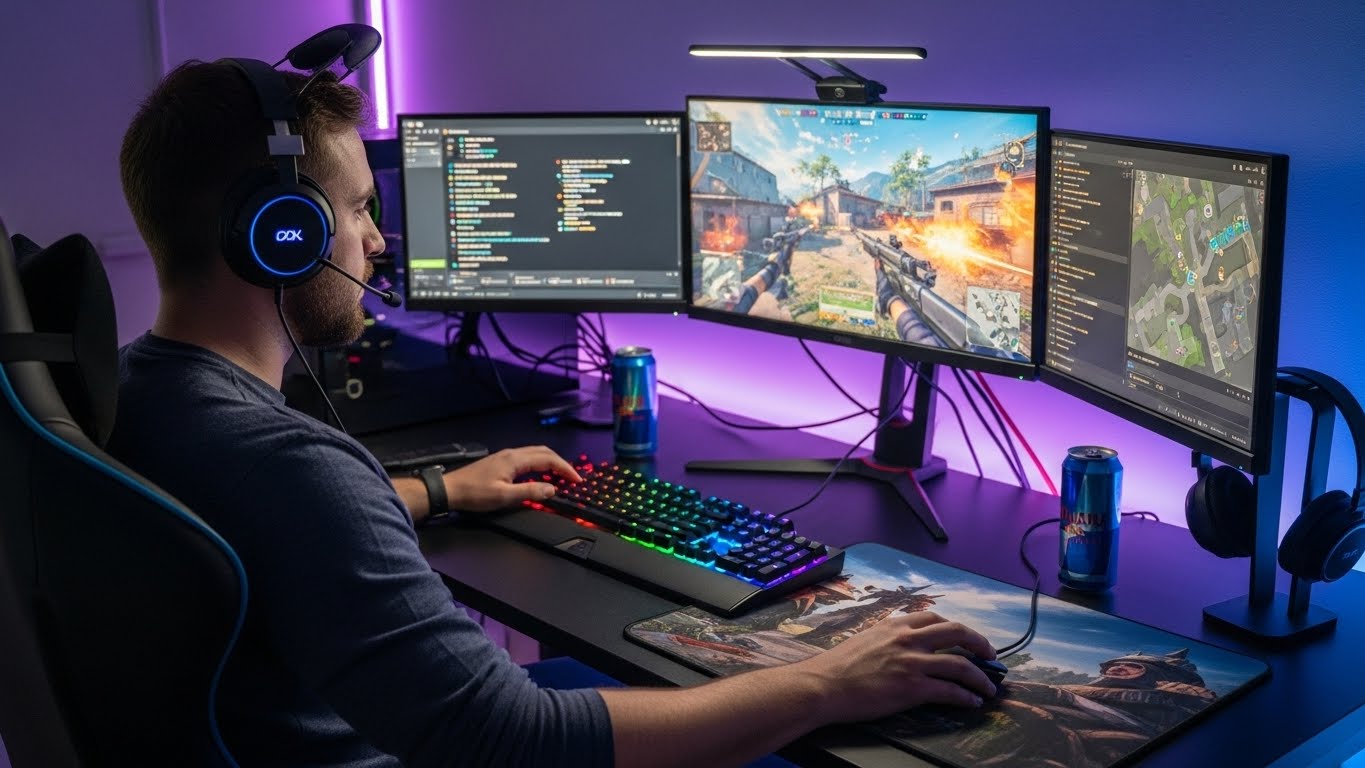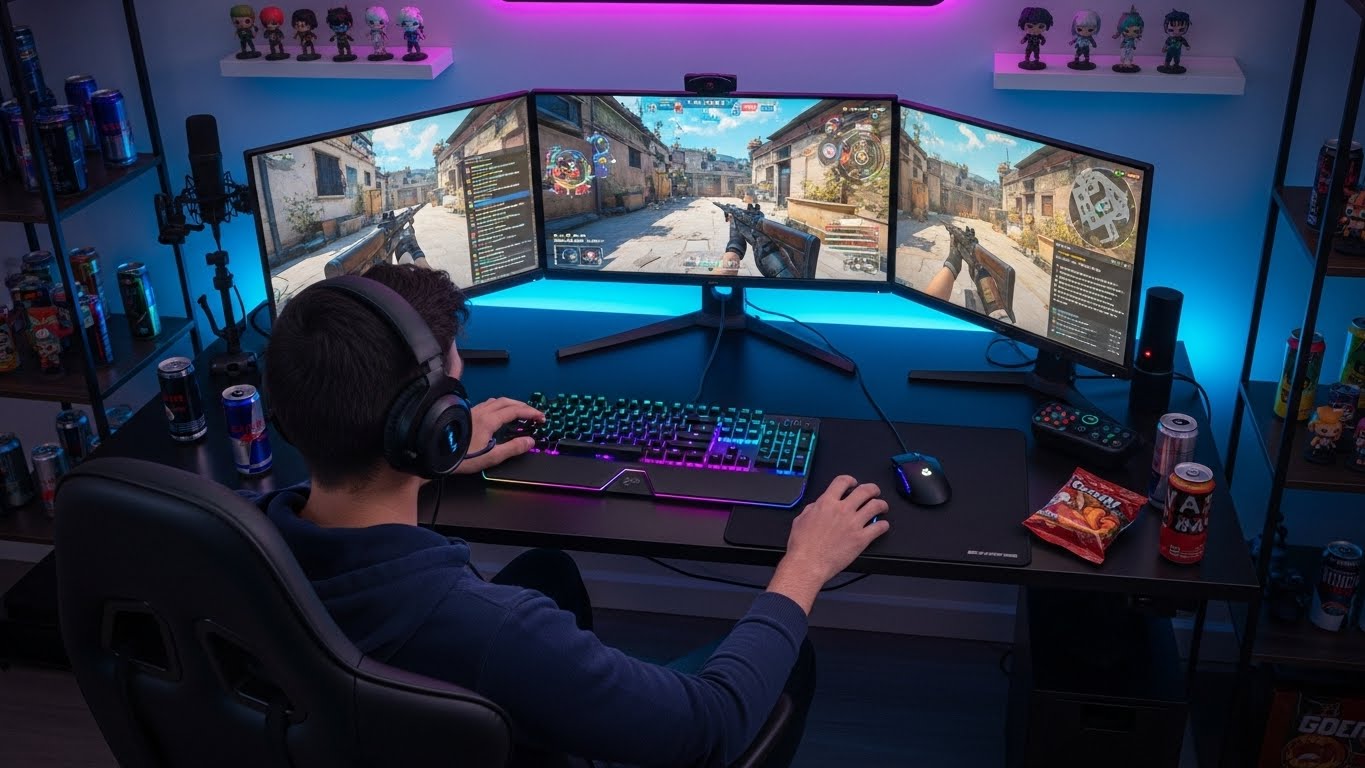
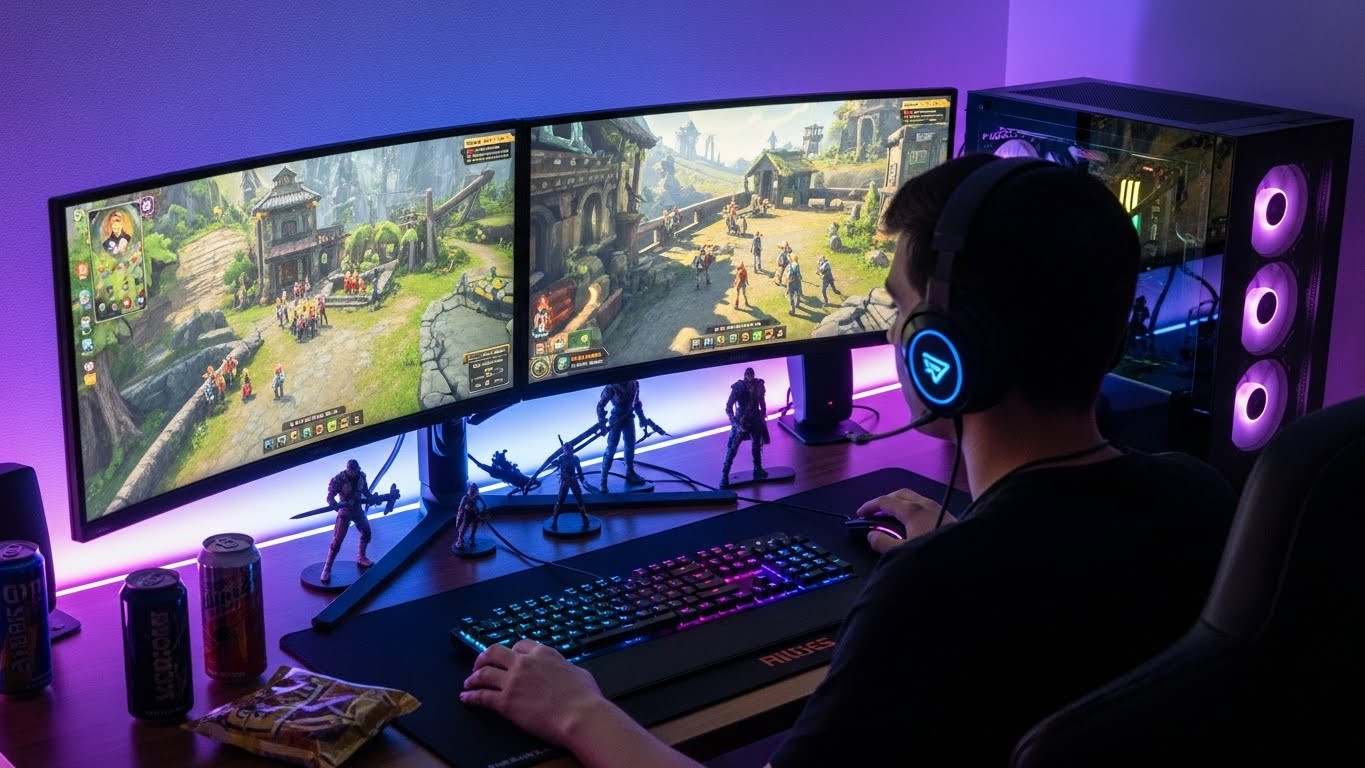
Introduction: Gaming – A Universal Experience Across Generations
Over the last few decades, gaming has grown from a niche hobby into one of the most influential forms of entertainment worldwide. Once considered a pastime for children or a rare escape for the tech-savvy, gaming now commands a multi-billion-dollar industry and connects people from all corners of the globe. It has transitioned from the arcade machines of the ’70s to expansive digital universes, immersive narratives, and cutting-edge technology. Whether you are someone who has been gaming since the days of pixelated graphics or a newcomer exploring the latest virtual worlds, gaming is an experience that transcends generations and cultures.
In this blog, we will delve into the fascinating evolution of gaming, why it captivates millions worldwide, and how it continues to shape our social, educational, and technological landscapes. From the simple joy of pressing buttons to the sophisticated world of esports, VR, and AI-driven gameplay, we’ll cover the multifaceted nature of this thriving industry.
The Birth of Gaming: From Pixels to Playable Worlds
The origins of video gaming can be traced back to the 1950s, but it was the 1970s that saw the birth of the modern video game industry. Pong, the first commercially successful arcade game, was released in 1972. Its simplistic design, with just two paddles and a bouncing ball, set the stage for an industry that would grow exponentially. At this stage, games were an experience for the lucky few who had access to arcades or early home consoles. The graphics were rudimentary, but the excitement of competition and the challenge of achieving high scores became an addictive pursuit.
As technology advanced, the ’80s and ’90s introduced groundbreaking titles and consoles that further cemented gaming’s place in popular culture. The introduction of the Nintendo Entertainment System (NES) in the mid-’80s and the release of iconic games like Super Mario Bros., The Legend of Zelda, and Metroid marked a turning point. These games provided deeper, more engaging experiences with characters, levels, and storylines that encouraged players to explore, solve puzzles, and invest time in mastering difficult challenges.
The 1990s ushered in the era of 3D graphics with the release of groundbreaking consoles like the Sony PlayStation, Sega Saturn, and Nintendo 64. With the introduction of 3D rendering, games like Super Mario 64 and Final Fantasy VII broke barriers in terms of game design, storytelling, and visual appeal. The internet also began to play a larger role in gaming during this period, laying the groundwork for the online multiplayer experiences we enjoy today.
The Psychological Allure: Why We Play Games
Why do we game? This question has intrigued psychologists, researchers, and gamers alike for years. At its core, gaming appeals to several fundamental human instincts and desires. Whether you’re drawn to the challenge, the escapism, or the social aspect, gaming provides a unique blend of excitement, satisfaction, and personal growth.
One of the most compelling reasons people play video games is the sense of accomplishment they offer. Progression mechanics in modern games, such as leveling up characters, unlocking new content, or earning in-game rewards, create a cycle of achievement and reward that stimulates the brain’s pleasure centers. Completing challenging missions, unlocking rare items, or reaching the final boss provides players with a sense of success that is often hard to find in other areas of life.
Another key psychological aspect of gaming is the sense of control it offers. In many games, players have the opportunity to make decisions that affect the outcome of the story, build worlds, or manipulate environments. This autonomy provides a sense of agency that many players find empowering, especially in an era where real-world choices often feel out of their control. For example, role-playing games like The Witcher 3 or Mass Effect give players the chance to shape their character’s journey, moral decisions, and even the fate of entire worlds.
Additionally, gaming offers an immersive escape from the pressures and stresses of daily life. For many, stepping into a virtual world can provide a temporary reprieve from the challenges they face in the real world. In an age where mental health awareness is more important than ever, gaming provides an outlet for relaxation, stress relief, and even therapeutic escapism.
The Social Aspect: Gaming as a Shared Experience
One of the biggest changes in the gaming industry in the last two decades is the transformation of gaming from a solitary activity into a deeply social experience. Online multiplayer games have revolutionized how people connect with each other, not only allowing players to compete against one another but also to collaborate in cooperative gameplay.
In games like World of Warcraft, Fortnite, and Call of Duty, players are able to connect with friends and strangers alike, forming online communities, clans, and guilds that transcend geographic boundaries. These social interactions foster camaraderie, teamwork, and a sense of belonging, creating lasting friendships that extend beyond the virtual world. In many ways, online gaming has become a platform for socializing, with players spending hours in digital spaces, talking, collaborating, and celebrating victories together.
Furthermore, live-streaming platforms such as Twitch and YouTube Gaming have given rise to a new generation of gaming personalities. These streamers build massive audiences by broadcasting their gameplay and interacting with viewers in real time. This interaction is often highly personal, with viewers engaging directly with streamers through comments, donations, and shared experiences. In some cases, gaming has become a career for those with the charisma and skill to entertain and engage an audience, blurring the line between professional and casual play.
The Impact of Technology: Changing the Game
Technology is at the heart of gaming’s continued evolution. From the pixelated graphics of early games to the photorealistic visuals of today, gaming technology has come a long way. Advances in hardware, software, and game engines have made it possible to create lifelike worlds, complex narratives, and mind-blowing visuals that were once unimaginable.
The development of powerful gaming consoles, like the PlayStation 5 and Xbox Series X, and high-performance gaming PCs has raised the bar for graphical fidelity, resolution, and frame rates. Games now feature vast, detailed open worlds, dynamic weather systems, and incredibly realistic character models that make it hard to distinguish virtual environments from real-life footage. For example, Red Dead Redemption 2 or The Last of Us Part II showcases the power of modern game engines, blending storytelling with technical achievements in ways that were once only possible in movies.
Another major technological advancement is the rise of virtual reality (VR) and augmented reality (AR) gaming. VR allows players to fully immerse themselves in digital worlds using headsets, controllers, and motion sensors. Games like Half-Life: Alyx and Beat Saber demonstrate the potential of VR, offering a more tactile and intuitive experience where players physically interact with the game world. Meanwhile, AR gaming, most notably exemplified by Pokémon GO, blends the digital and physical worlds, allowing players to experience game mechanics in the real world.
Cloud gaming, which allows players to stream games over the internet without the need for expensive hardware, is also changing the way we play. Services like Google Stadia, Xbox Cloud Gaming, and NVIDIA GeForce Now allow players to access high-quality games on virtually any device, making gaming more accessible and inclusive than ever before.
Esports: The Rise of Competitive Gaming
What was once a hobby is now a global sport. Esports, or competitive gaming, has exploded in popularity in recent years. Esports tournaments are broadcast on major platforms and often draw millions of viewers, rivaling the viewership of traditional sports events. Competitive titles like League of Legends, Dota 2, and Fortnite have turned gaming into a spectator sport, where professional players and teams battle it out for multi-million-dollar prizes.
Esports has given rise to professional players who train for hours daily, study strategies, and compete in high-stakes tournaments. These players have become celebrities in their own right, with large fan followings and lucrative sponsorship deals. The popularity of esports has also created a new career path for analysts, commentators, coaches, and event organizers, leading to a thriving ecosystem around competitive gaming.
Moreover, universities and colleges are now offering esports scholarships, further legitimizing competitive gaming as a viable career option. For the next generation of gamers, professional gaming is no longer just a dream but a potential career.
The Future of Gaming: What Lies Ahead?
Looking to the future, the possibilities for gaming are vast and exciting. One of the most anticipated developments is the continued advancement of virtual reality. As VR technology becomes more affordable and immersive, we may see a future where players can truly live within the game, interacting with characters and environments in ways that blur the line between reality and fiction.
Artificial intelligence (AI) is also set to revolutionize gaming. Advanced AI will create more intelligent, responsive NPCs that adapt to player choices, providing a more dynamic and personalized experience. In the near future, we may see procedurally generated worlds that evolve based on player behavior, making each playthrough a unique experience.
Another area that holds significant promise is cloud gaming. As internet speeds increase globally and cloud technology improves, gaming will become more accessible to people regardless of location or hardware limitations. This could democratize gaming, making high-quality experiences available to a wider audience and allowing gamers to play the latest titles without the need for expensive equipment.
Conclusion: Gaming as a Cultural Force
Gaming has evolved into much more than just a hobby; it has become a global cultural force that shapes how we interact, learn, and entertain ourselves. From its humble beginnings in arcades to the expansive digital worlds we explore today, gaming continues to captivate millions of people around the world. Whether for relaxation, competition, social connection, or personal achievement, gaming offers something for everyone.