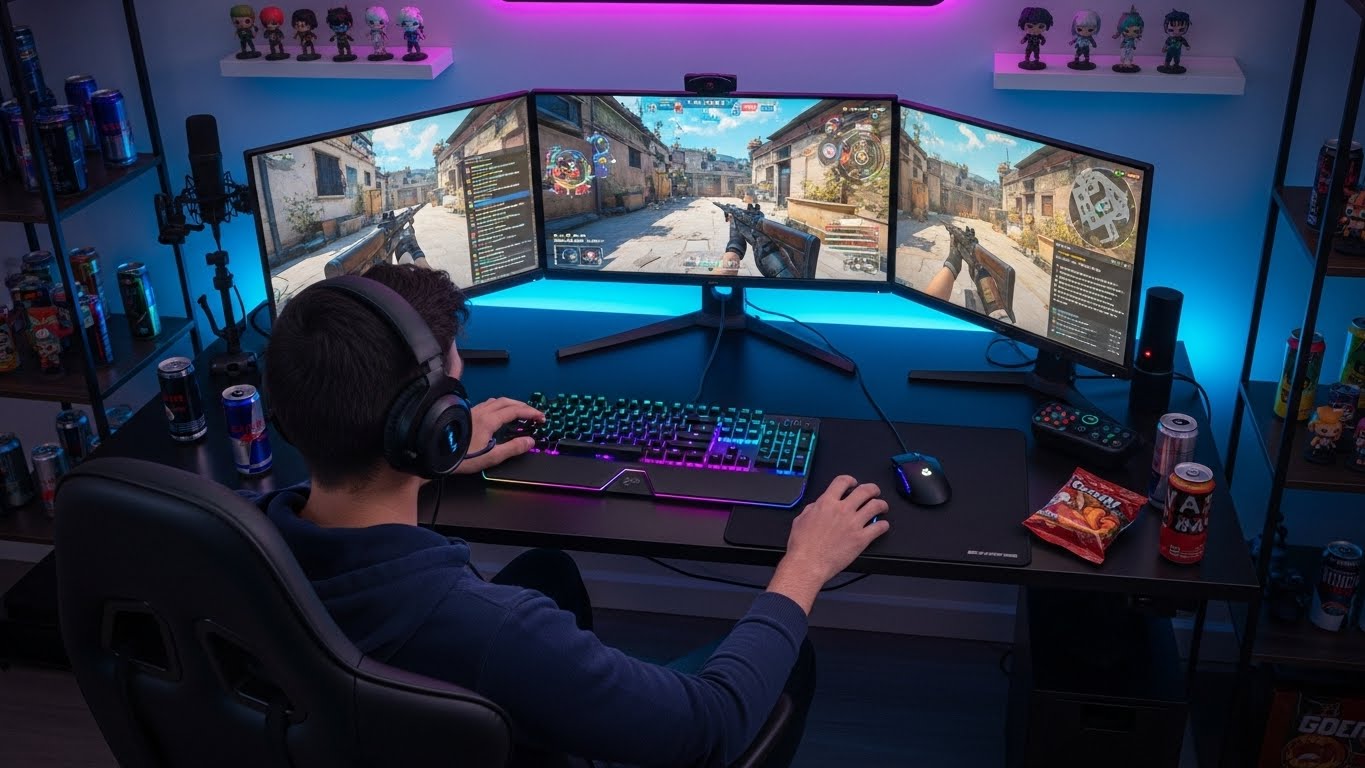

Gaming has transitioned from a niche hobby to a cultural force, and its influence continues to grow at a rapid pace. What began as simple pixelated games has blossomed into an industry worth billions, offering experiences that go far beyond entertainment. In this blog post, we will explore how gaming has evolved, the impact it has had on culture, and where it’s headed in the future.
The Origins of Gaming: Humble Beginnings
Gaming has its roots in the early 1950s, when scientists and engineers began experimenting with computer-based entertainment. The first known video game, Tennis for Two, appeared on an oscilloscope in 1958, offering players a rudimentary simulation of tennis. However, it wasn’t until the 1970s, with the release of Pong, that video games began to enter the mainstream. Pong was an arcade game that simulated table tennis, featuring simple paddle controls. Although primitive by today’s standards, Pong was revolutionary at the time and marked the first wave of video game popularity.
As the 1980s rolled in, home consoles like the Atari 2600 brought gaming into living rooms across the world. While the technology was limited, the concept of playing games at home quickly gained traction, and the gaming industry began to take shape.
The Golden Age of Arcades and Console Wars
The 1980s marked the golden age of arcades, where titles like Pac-Man and Space Invaders dominated the scene. Arcades became cultural hubs where people gathered to compete and socialize. The home console market also exploded, driven by iconic systems like the Nintendo Entertainment System (NES) and the Sega Genesis. With these consoles came some of the most beloved franchises in gaming, including Super Mario Bros., The Legend of Zelda, and Sonic the Hedgehog. These games set the foundation for what would become the modern gaming experience.
The rivalry between Nintendo and Sega was a defining feature of this era. Both companies fought tooth and nail for dominance, creating some of the most memorable marketing campaigns and game releases in history. This fierce competition helped shape the identity of gaming, introducing players to the concept of brand loyalty and giving rise to the notion that certain consoles were better than others.
The Transition to 3D and the Role of Storytelling
The 1990s were a turning point for gaming, as technological advancements led to the introduction of 3D graphics and more complex gameplay. The Sony PlayStation and Nintendo 64 ushered in a new era where games like Super Mario 64 and Final Fantasy VII began to offer immersive worlds and intricate stories. No longer were games just about jumping over obstacles or collecting coins—they became narratives that players could engage with, shaping the way we experience storytelling in the digital age.
Games also began to incorporate more open-world designs, giving players the freedom to explore vast landscapes. The evolution of 3D environments helped shape modern game mechanics, allowing developers to create more realistic, engaging worlds.
Online Gaming and the Rise of eSports
The early 2000s saw the rise of online gaming, transforming video games from solo experiences to social activities. The popularity of broadband internet helped pave the way for multiplayer games like World of Warcraft, Halo 2, and Counter-Strike. These games allowed players to connect with others around the world, competing and cooperating in real-time.
At the same time, eSports—competitive gaming at a professional level—began to take off. Games like League of Legends, Dota 2, and Overwatch have become mainstays in eSports tournaments, with players competing for multimillion-dollar prizes. Watching competitive gaming has become as popular as watching traditional sports, with live streams and broadcasts attracting millions of viewers worldwide. Esports organizations and sponsorships are now common, and the professional gaming scene continues to grow, offering new career opportunities for players, coaches, and analysts.
The Advent of Mobile Gaming: Gaming on the Go
In the 2010s, mobile gaming began to take center stage, driven by the rise of smartphones and tablets. Games like Angry Birds and Candy Crush Saga became massive hits, attracting players who might never have considered traditional gaming. Mobile games democratized the industry, making it accessible to anyone with a smartphone, regardless of age or experience level.
The casual nature of mobile games also introduced a new way of thinking about gaming. Unlike console and PC games, which often require longer time commitments, mobile games are designed to be played in short bursts. This change in gameplay structure has made mobile gaming more versatile, allowing players to engage with games during their daily routines, on public transport, or even during quick breaks at work.
Virtual Reality and the Next Level of Immersion
Virtual reality (VR) is arguably one of the most exciting frontiers in gaming today. With devices like Oculus Rift, HTC Vive, and PlayStation VR, players are now able to fully immerse themselves in digital worlds. VR gaming offers a level of immersion that traditional gaming can’t match—players can step into their favorite games, looking around 360 degrees and interacting with the environment using motion controllers.
Games like Beat Saber and Half-Life: Alyx have shown the true potential of VR, offering experiences that are both innovative and engaging. The use of VR in gaming has the potential to change the way we interact with digital content, moving beyond just entertainment to education, training, and other fields. However, VR technology is still in its infancy, and the future holds endless possibilities as it continues to evolve.
Augmented Reality: Merging the Digital and Physical Worlds
Alongside virtual reality, augmented reality (AR) is also pushing the boundaries of how we experience games. AR overlays digital elements onto the real world, allowing players to interact with both the physical and virtual spaces simultaneously. The massive success of Pokémon Go in 2016 demonstrated how AR could blend gaming with real-life activities, encouraging players to explore the world around them while catching virtual creatures.
As AR technology improves, it’s expected to have an even greater impact on gaming. From interactive storytelling to new types of gameplay that integrate real-world locations, AR could redefine the relationship between games and the players who enjoy them.
The Social and Cultural Impact of Gaming
Gaming has become more than just a form of entertainment—it has become a social activity that connects people across the globe. Online multiplayer games have fostered communities where players can collaborate, compete, and form lasting friendships. Additionally, live streaming platforms like Twitch have allowed gamers to share their experiences with a global audience, making gaming a spectator sport in its own right.
Games have also become a powerful medium for storytelling, with many titles tackling complex themes such as loss, love, and personal growth. Titles like The Last of Us, Red Dead Redemption 2, and God of War have shown that video games can evoke deep emotional responses, similar to movies or literature. The ability to create immersive, emotionally engaging stories has elevated gaming as a legitimate art form.
What’s Next for Gaming?
The future of gaming is filled with potential, driven by technological advancements and the continued creativity of developers. Cloud gaming, where games are streamed from remote servers instead of run locally on hardware, is on the rise. Services like Google Stadia and Xbox Cloud Gaming are enabling players to enjoy high-quality games on a variety of devices, making gaming more accessible than ever.
The use of artificial intelligence (AI) in games is also set to revolutionize how we experience digital worlds. From dynamic, responsive NPCs to procedurally generated environments, AI will help create even more personalized and unpredictable gaming experiences. As technology continues to evolve, it’s clear that gaming will continue to push the boundaries of what we thought was possible.
Conclusion
Gaming has come a long way from its humble beginnings in the 1950s. Today, it is an industry that spans across consoles, PCs, mobile devices, and even virtual and augmented reality platforms. As we look to the future, the possibilities for gaming are endless. With new technologies like VR, AR, and AI continuing to develop, the next generation of games will offer experiences that go beyond entertainment and into realms we’ve yet to imagine. Whether you’re a casual player or a professional, there has never been a better time to dive into the world of gaming. The future is bright, and it’s waiting for you.